Women empowerment has become a powerful and popular phrase. It’s printed on t-shirts, shared in captions, and celebrated at conferences and panels. But beneath the slogans lies a question we don’t often ask out loud: Is it really empowerment if it’s selective? When we pick and choose which women deserve support, celebration, and protection, are we actually empowering them, or are we disempowering ourselves?
Selective empowerment happens when support is conditional. We celebrate women who look like us, think like us, worship like us, vote like us, or live like us. We uplift women whose stories make us comfortable and whose journeys validate our own choices. Meanwhile, we withdraw support from women whose paths we don’t understand, whose mistakes are visible, or whose lives challenge our beliefs. That kind of empowerment isn’t empowerment at all; it’s preference dressed up as progress.
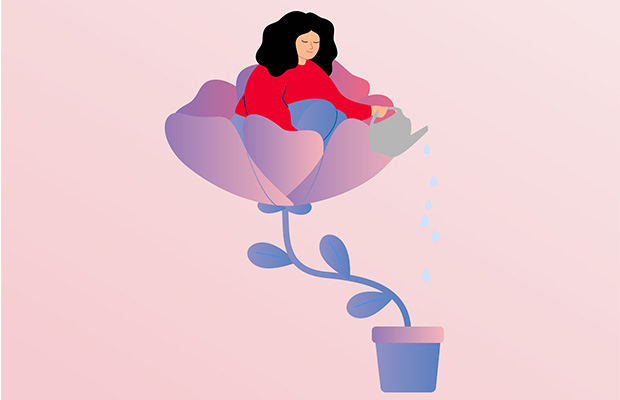
True empowerment is rooted in the belief that all women are worthy of Healing, Opportunity, Purpose, and Empowerment. All women have a voice to be heard and acknowledged; even when we disagree. Empowerment doesn’t require endorsement of every decision; it requires recognition. When empowerment becomes exclusive, it quietly reinforces the very systems it claims to dismantle, competition, hierarchy, and conditional worth.
When women only empower women who “qualify,” we create invisible lines that divide rather than unite. We teach young girls that acceptance is earned, not a fundamental trait. We teach them that support is fragile and can be taken away at any time. Over time, this breaks trust and shatters sisterhood. Instead of building a collective strength, we find ourselves divided. We find ourselves hoping that we never fall on the wrong side of someone else’s standards.
There’s also a personal cost. Yes, selective empowerment disempowers others; but it also disempowers you. When you limit compassion, you limit your capacity for growth. When you shrink your circle, you shrink your influence. Empowerment that is conditional requires constant policing: Who deserves support today? Who doesn’t? That’s exhausting work, and it keeps us focused on judgment instead of justice. It becomes a performance instead of a principle. But when empowerment is inclusive, it becomes transformational. It builds bridges instead of burning them.
Real empowerment doesn’t ask, “Is she like me?” It declares, “She is human, and yes, I want to help her thrive!”